 27BVZPN9341L1ZG
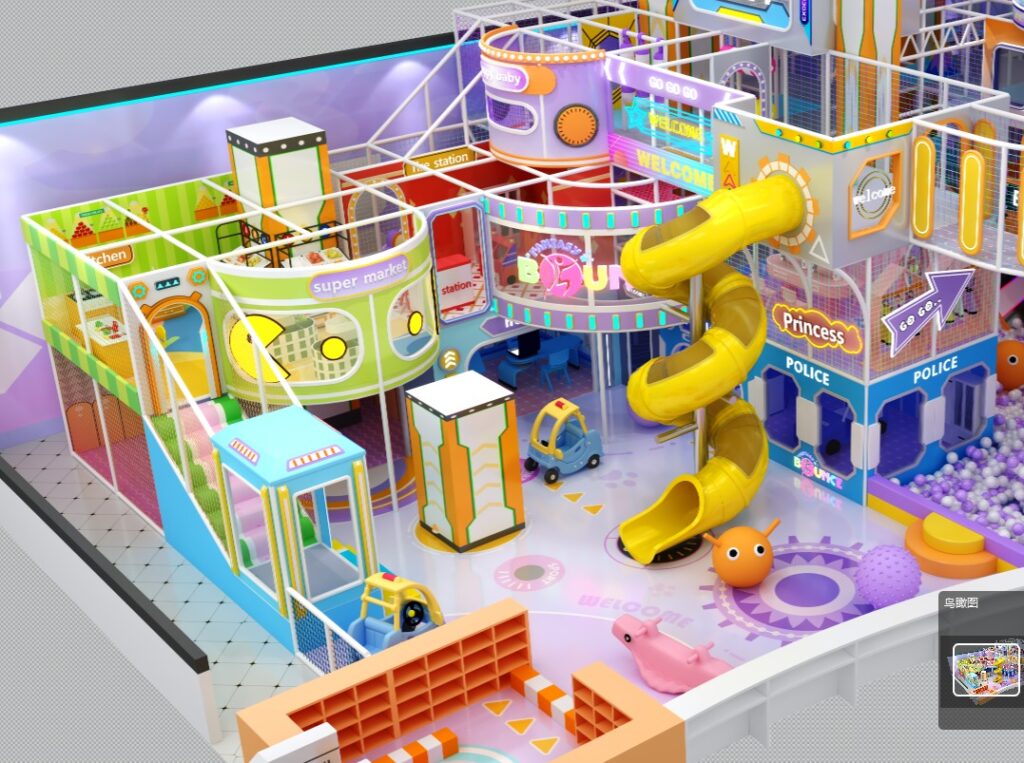
A kid’s play area can be one of the smartest additions to a commercial space. It increases dwell time, attracts families, improves customer experience, and can even become a strong differentiator for malls, restaurants, schools, clubs, resorts, cafés, and family entertainment centers. But a successful play area is not just about buying colorful equipment and placing it in a corner. It requires careful planning, safety awareness, smart design, durable materials, maintenance systems, and a clear understanding of your business goals.
Before installing a kid’s play area, business owners should think like operators, not just buyers. The right setup can help create trust, repeat visits, and better revenue opportunities. The wrong setup can lead to safety risks, repair costs, dissatisfied customers, and wasted investment. This guide explains everything you need to know before installing a kids’ play area, from planning and budgeting to safety, equipment selection, space design, and long-term maintenance.
Why a Kid’s Play Area Matters for Business
A well-planned play area adds value far beyond entertainment. Families prefer places where children are engaged safely while adults shop, dine, relax, or attend events. This is especially important in business categories like malls, restaurants, hospitals, hotels, cafés, schools, resorts, and community spaces.
From a marketing point of view, a play area helps you stand out. Parents are more likely to choose a venue that feels family-friendly. Children enjoy the experience, and happy children often mean longer stays and more spending. In many businesses, a kids’ zone becomes a loyalty driver because it improves the overall customer journey.
However, the goal should not only be to “have a play zone.” The real goal is to build a safe, attractive, and functional area that supports your brand and your operating model. That means every design decision should connect back to customer experience, maintenance effort, and business return.
Define Your Business Goal First
Before selecting slides, soft play units, trampolines, or climbing structures, decide what the play area should achieve. A play zone for a restaurant will be different from a play zone in a shopping mall or a resort. The business goal determines the size, style, equipment, and staffing model.
Ask yourself these questions:
- Is the play area meant to increase footfall?
- Is it meant to improve customer retention?
- Will it be a free amenity or a paid attraction?
- Is the target age group toddlers, young children, or mixed-age kids?
- Do you want a small waiting-area solution or a major family entertainment feature?
Once the purpose is clear, the rest of the planning becomes easier. For example, a café may need a compact soft play corner that is easy to supervise. A mall may need a larger modular installation with high visual impact. A school may need educational and safety-focused equipment. A resort may need a premium, durable, themed solution that matches the property.
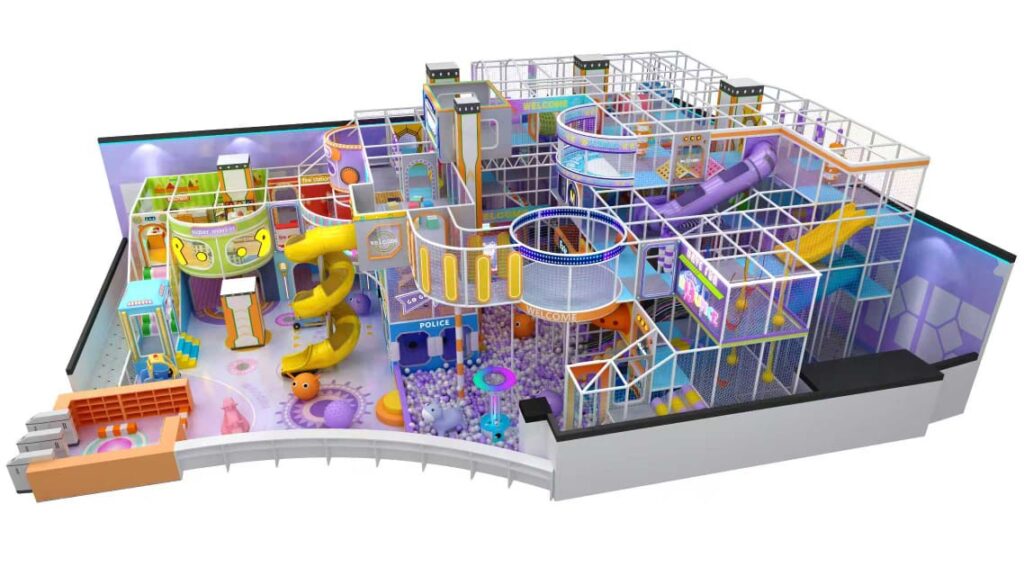
Choose the Right Location
Location inside your property is a critical decision. Even the best equipment will underperform if it is placed in the wrong area. The play zone should be visible, accessible, and convenient for both parents and staff.
A good location usually has:
- Easy visibility from adult seating or common areas.
- Enough natural or artificial lighting.
- Good ventilation.
- Safe flooring and proper drainage if near outdoor exposure.
- Sufficient space for movement, supervision, and emergency access.
- Low risk of conflict with high-traffic business operations.
Avoid placing kids’ play areas near kitchens, sharp corners, crowded walkways, slippery entry points, or loud mechanical zones. If the area is in a mall or commercial building, confirm fire exits, evacuation routes, and load-bearing considerations before installation.
Visibility matters because parents need to feel confident that they can keep an eye on their children. A hidden or isolated play space may reduce trust. The best play zones feel open, supervised, and naturally integrated into the business environment.
Know Your Target Age Group
One of the most common mistakes business owners make is mixing all age groups into one play environment. Toddlers, preschoolers, and older children have different needs, abilities, and safety risks. A good play area design should reflect the exact age group you want to serve.
For toddlers, the focus should be on:
- Soft, low-height equipment.
- Cushioned flooring.
- Rounded edges.
- Simple climbing and crawling elements.
- Sensory and interactive play.
For preschool and primary-age children, you can include:
- Slides.
- Ball pits.
- Climbing frames.
- Tunnels.
- Interactive panels.
- Small obstacle features.
For older children, the design can include:
- Larger climbing structures.
- Trampoline elements.
- More active play zones.
- Physical challenge features.
Age-appropriate design is essential for safety. It also improves the customer experience because children enjoy equipment that feels designed for them. A toddler will not benefit from a large complex structure built for older children, and older children may get bored in a space that is too simple.
Select the Right Equipment
The equipment you choose should match your business goals, audience, and available space. There are many options, but not every product is suitable for every location. Business owners should focus on durability, safety, cleaning ease, and long-term performance rather than only on appearance.
Common play area equipment includes:
- Soft play blocks and modules.
- Slides.
- Climbers.
- Ball pits.
- Tunnels.
- Activity panels.
- Trampolines.
- Indoor obstacle courses.
- Pretend-play units.
- Outdoor swings and play structures.
If you are installing a commercial space, always choose equipment designed for heavy use. Household-grade products are not suitable for business environments. Commercial play equipment should handle frequent activity, be easy to clean, and remain stable under repeated use.
It is also wise to consider modular equipment. Modular systems are easier to expand, replace, and maintain. They allow you to update the space later without rebuilding everything from scratch.
Safety Should Be Non-Negotiable
Safety is the most important part of any kid’s play area. Parents trust your business with their children, and that trust must be protected. A safe environment is not just a legal responsibility; it is also a brand reputation issue.
Important safety considerations include:
- Proper flooring and impact absorption.
- Rounded corners and enclosed structures where needed.
- Secure installation and anchoring.
- No exposed sharp edges or protruding hardware.
- Clear spacing between active zones.
- Age-based separation when necessary.
- Regular inspection of wear and tear.
- Safe entry and exit points.
- Emergency access for staff.
You should also think about visibility and supervision. Staff or parents should be able to monitor children without obstruction. Safety rules should be displayed clearly, and the zone should have a controlled entry system if needed.
Do not treat safety as an afterthought. Many business owners focus on the appearance of the play area first and try to solve safety later. That approach is risky. A safer design saves money, reduces accidents, and builds long-term trust.
Flooring and Surface Matter
The floor is one of the most important parts of a play area, yet it is often ignored. Good flooring reduces injury risk, improves comfort, and protects the equipment itself. The right flooring depends on whether the zone is indoor or outdoor, and whether the activity is light, moderate, or highly active.
For indoor play zones, popular flooring options include:
- EVA or rubber mats.
- Foam flooring.
- Padded vinyl flooring.
- Impact-absorbing surfaces.
- Carpet tiles in low-impact zones.
For outdoor play zones, choose:
- Weather-resistant surfaces.
- Anti-slip flooring.
- UV-stable materials.
- Drainage-friendly designs.
- Impact-absorbing systems suitable for open-air use.
Flooring should be easy to clean and maintain. It should also be durable enough to handle high footfall. If the floor becomes slippery, uneven, or damaged, the entire play area becomes less safe. Business owners should not reduce the budget on flooring, because flooring is a key layer of protection.
Read more about the related topics
Design for Supervision
A play area should not only be fun; it should also be easy to supervise. Good supervision reduces accidents and improves peace of mind for parents. It also helps staff respond quickly if a child needs assistance.
To design for supervision:
- Avoid hidden corners and blind spots.
- Keep the structure open where possible.
- Place the play zone within natural sightlines.
- Use transparent barriers if needed.
- Make sure entry and exit points are visible.
- Keep equipment arrangement simple and logical.
If your business model includes staff supervision, plan their movement carefully. Staff should be able to see most of the area without constantly walking into the play zone. If supervision will be parent-led, ensure seating is comfortable and positioned so adults can watch children easily.
The design should also support traffic flow. Children should be able to move freely without bottlenecks at entrances, slides, or popular activity areas. A congested play zone feels stressful and unsafe, even if the equipment itself is good.
Budget Beyond the Equipment Cost
Many owners focus only on the equipment purchase price. That is only one part of the total investment. A real budget should include design, installation, flooring, transport, branding, safety features, taxes, maintenance, and future repairs.
Your budget may include:
- Consultation and design planning.
- Equipment manufacturing or sourcing.
- Transportation and logistics.
- Installation charges.
- Flooring and safety surfacing.
- Electrical or lighting work.
- Theming and branding.
- Signage and instruction boards.
- Maintenance tools and spare parts.
- Staff training.
- Periodic inspections and repairs.
It is smart to plan for long-term operational costs from the beginning. A cheaper setup that needs frequent repairs can cost more than a higher-quality system. Commercial buyers should think in terms of lifetime value, not just initial purchase price.
If your play area is part of a revenue-generating model, calculate how the investment supports business returns. Even if the zone is free, it may increase customer loyalty, basket size, or repeat visits. That indirect return is often significant.
Maintenance Is a Business Requirement
Installing a play area is only the start. Maintenance determines whether the space remains safe, attractive, and profitable. A neglected play area quickly loses appeal and can become a liability.
A strong maintenance plan should include:
- Daily cleaning.
- Weekly inspection of fasteners, joints, and surfaces.
- Monthly deep inspection.
- Replacement of worn parts.
- Checking padding, nets, and connection points.
- Cleaning of high-touch surfaces.
- Immediate repair of damaged items.
Maintenance is especially important for soft play systems and trampolines because they receive constant physical stress. Commercial use creates wear faster than many business owners expect. If you ignore maintenance, small issues can turn into major safety problems.
Keep a written maintenance log. This helps you track problems, repairs, and inspection history. It also shows professionalism and accountability. For businesses with insurance or compliance requirements, maintenance records can be very important.
Compliance and Legal Checks
Before installation, review the local compliance requirements that apply to your property and business type. Rules may vary depending on whether the play area is indoor, outdoor, commercial, or part of a public space. You may also need to consider fire safety, building approvals, accessibility, and local commercial regulations.
Business owners should check:
- Structural suitability of the site.
- Fire exit access.
- Emergency evacuation planning.
- Accessibility for children and parents.
- Electrical safety if lights or interactive systems are included.
- Insurance requirements.
- Vendor documentation and warranty terms.
If the project is in a mall, hotel, school, or multi-use property, coordinate early with the property management team. Delays often happen when people wait until the equipment arrives before discussing approvals. Good planning avoids costly rework.
This is also the stage where professional installation matters. A trusted installer understands site conditions, safe assembly, anchoring, and practical field adjustments. Correct installation is just as important as product quality.
Branding and Theme Help Conversion
A kids’ play area should feel like part of your brand, not a random add-on. Colors, shapes, visuals, and themes should match the business environment. Good branding makes the area memorable and more appealing to families.
You can use themes such as:
- Jungle adventure.
- Ocean world.
- Space exploration.
- Castle and fantasy.
- Farm and animals.
- Sports and activity.
- Bright rainbow play zones.
Branded play areas improve social media appeal too. Parents often take photos and share them online. That means your play zone can become a marketing asset. A clean, attractive, themed environment can generate organic attention and reinforce your identity as a family-friendly business.
Do not overcomplicate the design. A strong theme works best when it is visually attractive, safe, and easy to maintain. Too many decorative elements can make cleaning harder and maintenance more expensive.
Think About Revenue and ROI
A kids’ play area can be a cost center or a revenue driver, depending on how it is structured. Some businesses use it as a free value-added service, while others directly monetize access through entry fees, memberships, packages, or event bookings.
Ways a play area can support ROI:
- Increase customer dwell time.
- Improve repeat visits.
- Encourage family spending.
- Support birthday party bookings.
- Create add-on service opportunities.
- Improve brand perception.
- Increase occupancy in commercial venues.
To measure ROI, track metrics such as:
- Footfall before and after installation.
- Average customer stay time.
- Repeat customer rate.
- Event or birthday bookings.
- Feedback from parents.
- Maintenance cost over time.
ROI is not always immediate. In many cases, the play area works by strengthening the business ecosystem. It helps your property become more family-friendly, more memorable, and more competitive.
Work With the Right Installer
The success of your project depends heavily on the team that designs and installs it. A professional installer understands layout, safety, material selection, and long-term performance. They can also guide you on the most suitable setup for your budget and business type.
A reliable installer should provide:
- Site assessment.
- Custom design support.
- Material guidance.
- Installation expertise.
- Safety-focused execution.
- After-sales maintenance support.
- Spare part support.
- Warranty clarity.
Do not choose a vendor only because the price is low. Ask for previous projects, material details, installation method, and service support. For a business investment, experience matters. A good partner helps reduce risk and makes the entire project smoother.
Final Planning Checklist
Before you install a kids’ play area, make sure these questions are answered:
- What is the purpose of the play area?
- Who is the target age group?
- Where will it be located?
- What equipment suits the space?
- Is the flooring safe and durable?
- How will supervision work?
- What is the total budget?
- What are the maintenance needs?
- Are compliance and safety issues covered?
- Who will install and support the equipment?
If these points are clearly planned, your project is far more likely to succeed. A kids’ play area should be fun, but it should also be practical, profitable, and safe. When business owners plan carefully, they create a space that serves children, reassures parents, and supports the business for years.
Conclusion
Installing a kid’s play area is a smart move for many businesses, but it should be approached as a strategic investment. The right location, age-appropriate equipment, safe flooring, professional installation, and reliable maintenance can make all the difference. Business owners who plan properly create an asset that improves customer experience, builds trust, and supports long-term growth.
The best play areas are not just colorful spaces. They are well-designed systems that balance enjoyment, safety, durability, and business value. If you treat the project seriously from the start, your kid’s play area can become one of the most valuable features in your commercial space.